

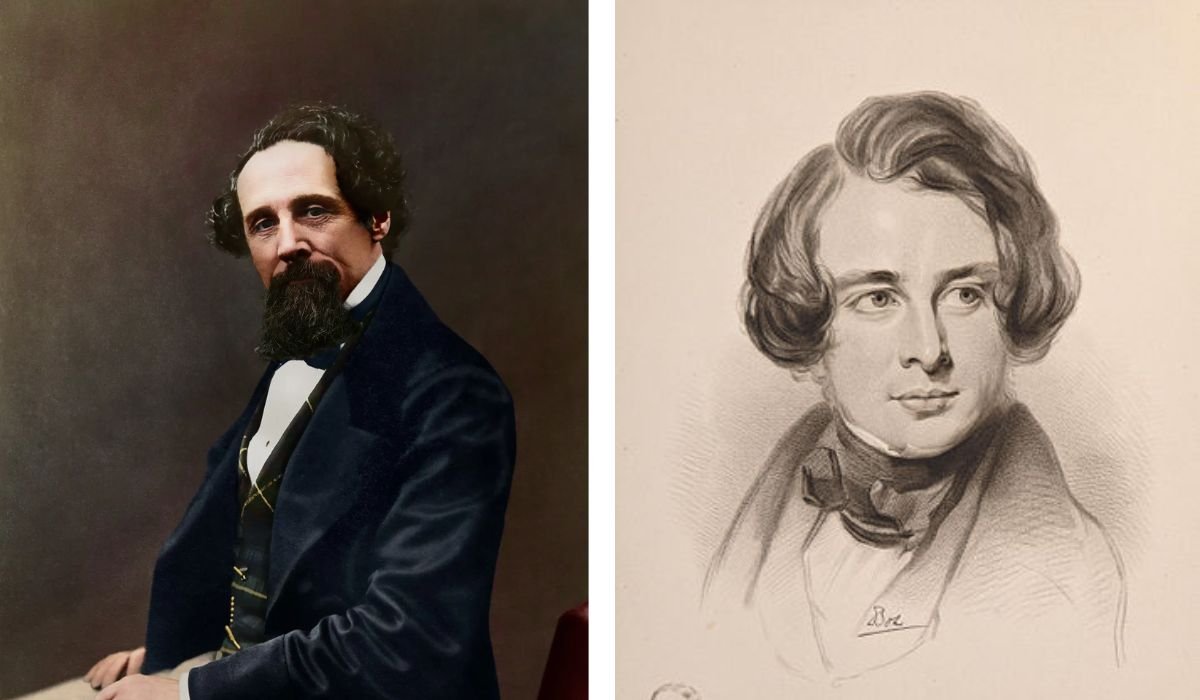
The Victorian era stands as a transformative period in British history, and few writers captured its complex essence quite like Charles Dickens. Born in Portsmouth, England, in 1812, he endured a turbulent childhood marked by poverty and labor in a blacking factory when his father was imprisoned for debt. These harrowing early experiences profoundly shaped his empathetic worldview and infused his later fiction with deep social conscience and unforgettable characters. Throughout his prolific career, Charles Dickens established himself as a dominant literary giant, utilizing his sharp wit and powerful storytelling to expose the harsh realities faced by the vulnerable working class.
Quick Bio Section
- Full Name: Charles John Huffam Dickens
- Birth: February 7, 1812, Portsmouth, Hampshire, England
- Death: June 9, 1870, Higham, Kent, England
- Key Movements: Victorian Literature, Realism, Social Criticism
- Notable Works: Oliver Twist, A Christmas Carol, Great Expectations
Early Hardships and the Crucible of Factory Life
Childhood for the young author was abruptly shattered when financial ruin forced his family into the debtor’s prison, leaving him to fend for himself. Working grueling hours labeling boot-blacking pots in a rat-infested warehouse left emotional scars that Charles Dickens carried throughout his entire life. This painful episode instilled in him a lifelong obsession with institutional cruelty, debtor laws, and the plight of impoverished children. Although brief, these formative months proved instrumental in shaping the thematic concerns of Charles Dickens. The trauma of those dark days became the crucible from which his extraordinary literary imagination and fierce moral outrage were ultimately forged.
Venturing into Journalism and Parliamentary Reporting

Entering the professional world through shorthand and newspaper reporting provided the young writer with an unfiltered view of London politics, corruption, and social injustice. Navigating the bustling streets of the capital as a journalist, Charles Dickens honed a sharp eye for eccentric human behavior and vivid urban detail. His ability to capture rapid dialogue and atmospheric street scenes quickly caught the attention of periodical editors eager for fresh voices. This rigorous newspaper background transformed Charles Dickens into a master observer of everyday Victorian life. The pacing and episodic nature of his journalistic assignments directly influenced how Charles Dickens later structured his iconic serialized novels.
The Phenomenal Rise of The Pickwick Papers
Publishing his first major serial work catapulted the young author into sudden literary stardom, transforming the Victorian publishing landscape overnight. Readers eagerly awaited each monthly installment of The Pickwick Papers, marveling at the comedic genius and warmth displayed by Charles Dickens across every page. This unexpected commercial triumph proved that serialized fiction could captivate a massive, enthusiastic working-class and middle-class readership simultaneously. Critics celebrated the vibrant energy brought by Charles Dickens to contemporary English literature. The immense popularity of this debut masterwork cemented the reputation of Charles Dickens as a cultural phenomenon who could effortlessly unite diverse audiences through humor.
Exposing Institutional Cruelty in Oliver Twist

Directing his literary spotlight toward the dark underbelly of the workhouse system, the celebrated novelist crafted a searing indictment of Victorian child exploitation. Through the harrowing adventures of an orphan boy in London, Charles Dickens exposed rampant municipal hypocrisy and criminal syndicates operating in the shadows. Contemporary readers were deeply moved by the emotional resonance and urgent social commentary delivered by Charles Dickens. This groundbreaking story forced Victorian society to confront the systemic failures harming destitute minors. By blending gripping narrative suspense with sharp social critique, Charles Dickens proved that popular fiction could serve as a powerful catalyst for meaningful humanitarian reform.
Crafting the Ultimate Holiday Tradition in A Christmas Carol
Tasked with addressing economic disparity during the festive winter season, the master storyteller rapidly composed a timeless parable about redemption, empathy, and human charity. The ghostly transformation of Ebenezer Scrooge under the guidance of Jacob Marley captured the hearts of readers worldwide, making Charles Dickens a household name globally. This compact masterpiece redefined how modern societies celebrate the winter holidays, emphasizing generosity toward the less fortunate. Millions continue reading the seasonal tale penned by Charles Dickens to remind themselves of the true spirit of community. Through this legendary novella, Charles Dickens secured an immortal place in the pantheon of world literature.
Exploring Ambition and Class in David Copperfield

Drawing heavily from his own deeply guarded childhood memories, the acclaimed author produced what he frequently considered his personal favorite among all his novels. The coming-of-age journey of the protagonist allowed Charles Dickens to explore complex themes of personal growth, romantic disillusionment, and professional perseverance. Literary critics often praise this semi-autobiographical masterpiece for its rich emotional depth and perfectly balanced cast of memorable supporting figures. The intricate narrative structure showcased the mature craftsmanship achieved by Charles Dickens at the height of his powers. This monumental achievement demonstrated how masterfully Charles Dickens could transform personal vulnerability into universal artistic triumph.
Satirizing the Legal System in Bleak House
Directing his fierce critique toward the labyrinthine Court of Chancery, the Victorian visionary exposed the devastating human toll of bureaucratic delays and endless litigation. The sprawling narrative of Bleak House utilized a dual-perspective framework, allowing the author to dissect both high society and the murky London slums with equal precision. Readers were captivated by the dense atmospheric fog and complex mystery orchestrated by Charles Dickens across multiple interconnected subplots. This ambitious undertaking highlighted the unwavering commitment of Charles Dickens to using his platform to challenge corrupt legal institutions. Through this dense social canvas, the writer painted an unforgettable portrait of a society buckling under its own administrative weight.
The Industrial Critique in Hard Times
Focusing his narrative lens on the bleak industrial fictional town of Coketown, the famous writer attacked the rigid utilitarian philosophies dominating Victorian factories and schools. By contrasting cold mechanical efficiency with the vital importance of human imagination, the novelist delivered a passionate defense of emotional expression. Factory owners and educators who prioritized profit and facts over compassion faced fierce condemnation from Charles Dickens within these industrial pages. This concise novel offered a stark warning regarding the dehumanizing effects of unchecked industrialization. Scholars frequently turn to this text to understand how clearly Charles Dickens perceived the spiritual dangers of modern manufacturing.
A Tale of Two Cities and Revolutionary France
Stepping away from contemporary English settings, the celebrated historical novelist transported his readers into the violent, turbulent streets of London and Paris during the French Revolution. The epic saga featuring Sydney Carton and Charles Darnay allowed the author to explore themes of sacrifice, resurrection, and political fanaticism on a grand scale. The famous concluding lines uttered by Carton remain among the most recognized passages ever written by Charles Dickens. This dramatic departure from his usual domestic realism proved that the creator possessed incredible versatility as a historical storyteller. Through this sweeping narrative, Charles Dickens captured the terrifying duality of revolutionary fervor and human redemption.
The Dark Mystery of Great Expectations
Returning to themes of class mobility, guilt, and unrequited love, the mature author crafted a haunting psychological narrative centered on the orphan Pip and his mysterious benefactor. The eerie marshes of Kent and the decaying grandeur of Satis House provided a chilling backdrop for the explorations conducted by Charles Dickens. Readers were engrossed by the intricate plot twists and deep moral questions raised by the novelist regarding wealth and personal integrity. This late-career masterpiece is widely regarded as a pinnacle of Victorian fiction. The psychological nuance displayed by Charles Dickens in this novel continues to fascinate literary critics and everyday readers alike.
Master of Characterization and Memorable Figures
Beyond intricate plots and social messaging, the legendary Englishman remains universally celebrated for populating his books with hundreds of eccentric, larger-than-life human figures. From the villainous Fagin to the perpetually optimistic Mr. Micawber, the unforgettable creations of the author mirror the colorful diversity of Victorian society. Actors, illustrators, and directors have spent generations bringing the vivid caricatures dreamed up by Charles Dickens to life on stage and screen. This uncanny gift for observation allowed the creator to invent names and personalities that have entered the English lexicon permanently. The sheer vitality of these characters ensures that the legacy of Charles Dickens endures across generations.
The Power of Public Readings and Performance
Possessing an extraordinary theatrical flair, the energetic author spent his later years embarking on exhausting international tours to perform his works live on stage. Audiences crowded auditoriums in England and America to watch Charles Dickens dramatically enact the death of Nancy or the miserly antics of Scrooge. These gripping public performances showcased the powerful dramatic instincts possessed by the novelist outside of traditional writing. While the grueling travel schedules severely damaged his physical health, Charles Dickens thrived on the direct emotional connection he shared with his devoted fans. This theatrical passion revealed that the performer viewed storytelling as an active, living dialogue with his public.
Journalism, Editing, and Literary Magazines
In addition to writing massive serial novels, the indefatigable creator managed and edited successful weekly literary magazines such as Household Words and All the Year Round. Through these influential publications, the journalist championed progressive journalism, publishing essays on sanitation, education, and foreign affairs. Managing these periodicals required immense administrative discipline, yet Charles Dickens handled the daily pressures with remarkable managerial skill. Writers and essayists frequently sought guidance from the editor while contributing pieces to his widely read journals. This editorial leadership proved that Charles Dickens was not only a creative genius but also a foundational pillar of Victorian media.
The Impact of Serialized Publication Formats
Revolutionizing how literature was consumed by the masses, the pioneer of monthly installments proved that serialized fiction could build unprecedented cultural anticipation and community engagement. Readers across the British Empire discussed cliffhangers crafted by the serialist in drawing rooms, factories, and railway carriages alike. This unique publishing model required Charles Dickens to maintain relentless suspense and flawless pacing throughout massive storytelling arcs. The commercial pressure of monthly deadlines pushed the writer to innovate continuously within his craft. Ultimately, this serialization strategy transformed the publishing industry, making literature an accessible, shared daily experience for millions of everyday citizens.
Family Life, Domestic Dynamics, and Travails
Behind his sparkling public persona, the personal life of the famous novelist was marked by complex domestic dynamics, intense artistic pressures, and eventual marital separation. Raising a large family while producing monumental literary works required the father to maintain a tightly organized yet emotionally demanding household. Though his marriage to Catherine Hogarth eventually dissolved after decades together, Charles Dickens remained fiercely devoted to his extensive circle of children and friends. These private trials and triumphs deeply influenced the emotional authenticity embedded in the domestic scenes crafted by the novelist. Understanding these personal complexities provides valuable insight into the multifaceted nature of Charles Dickens.
International Fame and American Tours
The extraordinary literary reach of the British author extended far across the Atlantic, making the writer a celebrated international superstar during his historic visits to the United States. American readers flooded piers and lecture halls eager to catch a glimpse of the celebrity during his extensive nineteenth-century travels. While his initial American tour sparked some friction regarding copyright laws and slavery, Charles Dickens maintained a massive, devoted overseas following. Newspapers across the globe chronicled every movement made by the tourist with intense public fascination. This global adoration cemented the status of Charles Dickens as one of the very first true international cultural icons.
The Final Unfinished Mystery of Edwin Drood
Working tirelessly until his final moments, the legendary master spent his dying days crafting a complex murder mystery that unfortunately remained forever incomplete. The sudden stroke that ended the life of the novelist in June 1870 left readers worldwide mourning the loss of a literary titan. Scholars and enthusiasts have spent over a century debating the intended resolution planned by Charles Dickens for this enigmatic final book. This abrupt end added a layer of tragic mythology to the incredible career of the author. The unfinished manuscript stands as a poignant reminder of a creative fire that burned brightly right up to its sudden extinction.
Memorialization and Burial in Poets’ Corner
Following his passing, the grieving nation united in mourning, leading to the burial of the beloved author in the prestigious Poets’ Corner of Westminster Abbey. Despite his explicit request for a quiet, private funeral, the immense public demand ensured that Charles Dickens received a solemn national farewell. Monuments, museums, and societies dedicated to preserving the memory of the writer were established in London and Portsmouth soon after his death. Visitors from every corner of the earth still pay homage to the permanent resting place of Charles Dickens today. This prestigious tribute confirmed that the cultural footprint left by the icon belongs among the greatest in human history.
The Enduring Influence on Modern Storytelling
Decades after his passing, screenwriters, novelists, and filmmakers continue drawing profound inspiration from the structural complexity, vivid imagery, and social themes pioneered by the Victorian master. Whenever a modern story tackles systemic inequality, corporate greed, or redemptive personal transformation, the DNA of the novelist is unmistakably present. Academics worldwide continue publishing extensive analyses exploring the psychological depth and linguistic brilliance of Charles Dickens in contemporary university curricula. The timeless appeal of the narratives shaped by Charles Dickens guarantees that his moral voice will never fade from relevance. Truly, the monumental impact of the great visionary remains an eternal cornerstone of global culture.
FAQs
- When was Charles Dickens born?
- Charles Dickens was born on February 7, 1812, in Portsmouth, England.
- What famous holiday novella did Charles Dickens write?
- Charles Dickens wrote the timeless classic A Christmas Carol in 1843.
- Why did Charles Dickens work in a factory as a child?
- Charles Dickens worked in a blacking factory because his father was imprisoned for overwhelming debt.
- What major social issue is highlighted in Oliver Twist?
- Charles Dickens exposed the cruelty of the workhouse system and the exploitation of vulnerable orphans.
- When did Charles Dickens pass away?
- Charles Dickens passed away on June 9, 1870, at the age of 58 in Kent, England.https://en.wikipedia.org/wiki/Charles_Dickens