


When humanity first gazes into the vast cosmos, the distant and icy celestial body known as Pluto captures our collective scientific imagination like few other worlds ever could. As the most famous dwarf planet located within our solar system, it sits quietly in the remote outer realms far beyond Neptune. Generations of stargazers grew up learning about this fascinating object as the ninth major planetary body. Modern astronomical research continues to unveil breathtaking details regarding its complex icy geology and dynamic atmosphere. Every new space mission observation expands our understanding of how distant planetary systems form. Researchers around the globe remain dedicated.
Quick Bio
- Name: Pluto (Designation: 134340 Pluto)
- Classification: Dwarf Planet / Kuiper Belt Object
- Discovery Date: February 18, 1930, by Clyde Tombaugh
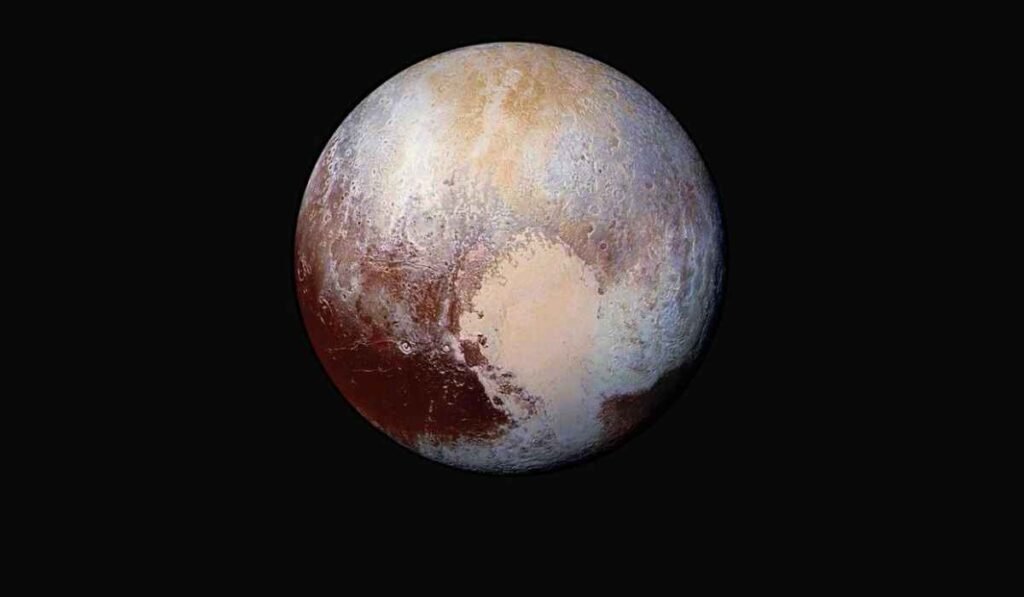
- Notable Feature: Heart-shaped glacier named Tombaugh Regio
The Historical Discovery of a Distant World
The fascinating journey to find Pluto began long before anyone actually laid eyes on this elusive world through a powerful telescope. Astronomers noticed subtle gravitational irregularities in outer orbits, leading them to hypothesize that a mysterious planet must exist. Percival Lowell played a massive role in sparking this historic quest, dedicating his final years to hunting for answers. Years of painstaking photographic plate comparisons finally bore fruit when a young astronomer successfully identified the target. The exciting announcement sent shockwaves across the global scientific community, inspiring countless dreams of deep space exploration everywhere today.
Understanding the Orbit and Extreme Distance
The unique orbital path of Pluto is remarkably eccentric and tilted compared to the nearly circular orbits of major planets. Traveling in an oval-shaped ellipse, it takes about two hundred forty-eight Earth years to complete just one full revolution. Because this orbit is so stretched out, it occasionally comes closer to the sun than Neptune during a specific portion. The immense distance means sunlight takes over five hours to reach the cold surface, plunging it into permanent twilight. This extreme environment makes studying distant celestial mechanics an extraordinary challenge for modern astronomers and planetary researchers seeking answers.
Why It Was Reclassified as a Dwarf Planet
In two thousand six, international astronomers sparked a worldwide debate by officially changing the scientific definition of a planet. To maintain planetary status, Pluto failed to meet the third criterion requiring an object to clear its neighborhood of debris. Because it shares its orbital zone with numerous icy bodies, experts reclassified it as a dwarf planet. This decision deeply disappointed many members of the public who grew up memorizing it as the ninth world. However, scientists argued that proper categorization was essential for maintaining order, accuracy, and clarity in modern astronomical taxonomy across all educational institutions globally.
The Historic New Horizons Flyby Mission

For decades, Pluto appeared through standard telescopes as nothing more than a blurry pixelated dot of reflected light. That all changed dramatically when a groundbreaking spacecraft launched to capture the very first close-up images ever recorded. Traveling at incredible speeds, the probe journeyed for over nine years across billions of miles to reach its target. The historic flyby provided humanity with breathtaking photographs that completely transformed our understanding of outer system geology. Scientists back on Earth watched in awe as data packets streamed in, revealing an active and dynamic sphere that continuously surprised researchers with unexpected geological features.
Unveiling Tombaugh Regio and the Heart of Ice
One of the most stunning discoveries made by the interplanetary probe was a massive, bright, heart-shaped region on Pluto. Appropriately named Tombaugh Regio in honor of its discoverer, this prominent surface feature immediately captivated global attention everywhere. Experts discovered that the left lobe of this geographic heart is a vast basin filled with smooth nitrogen ice. This unique geological feature actively reshapes itself through internal heat convection, making it look astonishingly young and vibrant. Surrounding this icy heart, rugged mountain ranges rise up to two miles high, composed entirely of solid water ice defying previous expectations.
The Surprising Atmosphere and Haze Layers
Despite being located so far from the sun, Pluto possesses a surprisingly complex and dynamic atmosphere of nitrogen gas. As the body orbits closer, surface ices sublimate into gas, creating a thin and delicate atmospheric envelope. Space probes captured stunning backlit images revealing that the surrounding skies feature multiple distinct blue haze layers. These atmospheric formations result from photochemical smog reactions triggered by solar ultraviolet light over long periods. Seasonal changes cause this tenuous atmosphere to collapse and expand dramatically during its exceptionally long orbital year, helping climatologists model similar phenomena on other distant frozen celestial bodies.
Charon and the Complex Multi-Moon System

No discussion of Pluto is complete without examining Charon, the remarkably large companion moon orbiting in tandem. Because Charon is so massive relative to its primary body, the two objects form a unique binary system. Both worlds remain tidally locked, always showing the exact same face to each other as they spin through space. Astronomers also discovered four smaller inner moons orbiting nearby: Nix, Hydra, Kerberos, and Styx. These tiny satellites tumble chaotically due to shifting gravitational fields, giving researchers vital insights into planetary collision origins, satellite capture mechanisms, and the early evolution of our solar neighborhood.
Internal Composition and Subsurface Oceans
Beneath its rugged icy crust, scientists believe that Pluto might harbor a hidden liquid water or slushy ocean layer. Tidal heating and minor radioactive decay within the core could generate enough internal warmth to keep subsurface water from freezing. The presence of tectonic fault lines and extensional fractures strongly supports the theory of internal planetary expansion over time. As the interior slowly cools and freezes, the surface responds with dramatic fracturing, faulting, and tectonic readjustments. This internal activity suggests small outer bodies share geological traits with the ocean-bearing icy moons orbiting massive gas giants in our solar system today.
Surface Colors, Chemistry, and Tholins
The vivid coloration of Pluto ranges from charcoal black to deep red, creating a stunning visual tapestry across the terrain. These varied hues are primarily caused by complex organic molecules known as tholins forming continuously. Tholins develop when solar ultraviolet radiation interacts with surface methane and nitrogen, creating a reddish residue over long durations. Experts examining spectral data identified deposits of carbon monoxide and water ice mixed together extensively across regions. This intricate chemical interplay makes the distant world a fascinating laboratory for studying prebiotic chemistry, organic distribution, and potential molecular precursors of life in deep space environments.
The Role in the Kuiper Belt
Positioned deeply within the vast expanse of the Kuiper Belt, Pluto serves as the anchor for an entire population. This primordial region contains thousands of icy relics left over from the formation of our earliest planetary neighbors. Comparing this largest resident to smaller Kuiper Belt objects gives astronomers a window into primordial solar system history. Its gravitational influence helps sculpt the orbits of nearby smaller bodies, creating gaps and resonant clusters across the region. Studying these phenomena helps researchers understand planetesimal growth, migration patterns, and survival rates in the freezing outer reaches where ancient building blocks remain largely undisturbed.
Comparison with Other Dwarf Planets
To truly appreciate the uniqueness of Pluto, scientists frequently compare it to other known dwarf planets like Eris. While Eris is more massive, this prominent Kuiper Belt resident is slightly larger in physical volume and complex geology. The atmosphere observed here is far more robust and active than those detected on most other similar outer objects. Furthermore, the diverse topography exceeding expectations ranges from smooth glacial plains to towering water ice mountains. Evaluating these differences allows astrophysicists to categorize the physical limits of planetary characteristics, highlighting how diverse dwarf worlds can be while defying simple classifications across the entire outer cosmos.
Future Exploration and Potential Return Missions
The success of the initial flyby has left scientists eager to launch a return orbiter mission to Pluto. Future mission concepts propose sending a specialized spacecraft that could enter orbit for extended, long-term scientific observations. An orbital insertion would allow researchers to monitor seasonal changes over multiple Earth years in high definition. Advanced propulsion technologies and gravity assists are being studied to make a return trip economically feasible for agencies. Future probes might even deploy landers onto the surface to analyze pristine ice samples directly, driving modern aerospace innovation, deep-space planning, and the ongoing quest to understand outer frontiers.
Cultural Impact and Legacy in Popular Science
Beyond hard science, Pluto holds a legendary status in global popular culture, inspiring art, music, and literature. From science fiction novels to iconic cartoon characters, the famous celestial name resonates deeply with people of all ages. When demoted from planet status, public outcry proved how emotionally attached humanity is to this distant sphere. This widespread affection sparked broader public interest in astronomy, education, and space exploration funding worldwide. Ongoing public discourse teaches valuable lessons about how scientific definitions evolve as new evidence emerges, bridging the gap between complex astrophysics and everyday human wonder while leaving an enduring legacy for future generations.
Challenges of Observing It from Earth
Observing Pluto from ground-based telescopes presents formidable challenges due to its extreme distance and tiny apparent size. Because the surface reflects very little sunlight, astronomers must use massive observatories equipped with advanced adaptive optics. Atmospheric interference on Earth further blurs incoming light, making surface details nearly invisible to standard optical instruments. Space telescopes play a crucial role in capturing sharper images and tracking albedo variations over extended periods. Occultations offering clever ways to measure atmospheric density occur when the dwarf planet passes in front of distant background stars, representing major triumphs of modern astronomical measurement techniques overcoming severe environmental hurdles.
Astrobiology and the Search for Prebiotic Chemistry
While the surface of Pluto is far too cold to support active life, its complex organic chemistry fascinates astrobiologists. The presence of nitrogen, carbon, and hydrogen compounds creates interesting raw ingredients for prebiotic chemical reactions in space. Energy from ultraviolet light and cosmic rays transforms simple molecules into complex structures, helping scientists understand interstellar chemistry. Furthermore, if a warm subsurface ocean exists within, it could theoretically offer protected environments for interesting chemical evolution. Astrobiology looks at these cold archetypes to understand how organic matter distributes across outer planetary systems, expanding our definition of potentially habitable zones throughout the galaxy.
Educational Value and Inspiring the Next Generation
The ongoing fascination with Pluto serves as a powerful educational tool for inspiring students in STEM fields. Teachers frequently use this topic as a gateway to introduce children to gravity, orbital mechanics, and planetary science. The emotional connection students feel makes learning about astronomy engaging and memorable across all grade levels and school districts. Science fairs and classroom projects encourage critical thinking and scientific inquiry among young learners exploring outer space. Educational outreach programs leverage this universal popularity to promote scientific literacy, helping cultivate the next generation of researchers while proving that science education can be both rigorous and deeply inspiring.
Summary of Scientific Achievements
Decades of research have transformed our understanding of Pluto from a mysterious point of light into a well-mapped world. The catalog of discoveries includes glacial flows, mountain ranges, and complex atmospheric hazes documented during exploration. These scientific milestones have rewritten planetary science textbooks around the world through international collaborations maximizing return on investment. Every research paper published adds another vital piece to the grand puzzle of solar system formation and evolution. The legacy of these achievements ensures that this pioneering world will always be remembered fondly by researchers honoring the dedicated scientists who studied the outer system for decades with remarkable precision.
The Cosmic Significance of Small Worlds
Reflecting on Pluto reminds humanity that small celestial objects hold immense secrets about cosmic history. While major gas giants dominate the solar system, dwarf planets preserve pristine primordial material safely for future study. Understanding these objects gives context to how planetary systems form and evolve across the wider universe over billions of years. Unique physical characteristics challenge our assumptions and force scientists to expand theoretical models regarding outer system dynamics. Recognizing the importance of small outer bodies elevates the status of all Kuiper Belt objects in modern astronomy, proving definitively that physical size does not limit scientific significance across distant galactic realms.
Looking Forward into the Deep Future
As technology advances, our capacity to study Pluto and the outer solar system will grow exponentially over coming centuries. Future generations will undoubtedly uncover new phenomena hidden within these complex, freezing environments using revolutionary tools. Whether through advanced telescopes, improved computer models, or new spacecraft, our fascination with outer space will never fade. The journey of understanding these frontiers is far from over, with countless mysteries waiting to be unraveled by dedicated researchers. This enduring pursuit of knowledge defines humanity’s innate drive to explore the dark cosmos, continuing an ongoing epic of human curiosity, scientific triumph, and boundless exploration.
Conclusion and Final Thoughts on the Icy Frontier
In conclusion, the exploration of Pluto stands as one of the most remarkable triumphs in modern space science. From its historic discovery by Clyde Tombaugh to the breathtaking imagery captured by modern robotic probes, every milestone amazes us. It represents the resilience of human curiosity and our relentless drive to uncover the deepest secrets of the universe. As we continue analyzing accumulated data and planning future missions, this icy world will forever inspire stargazers. The legacy forged by studying Pluto ensures it will remain a cornerstone of planetary science, reminding us of the infinite wonders waiting quietly in the dark expanse beyond Neptune.
5 FAQs
- What is Pluto and where is it located?
- Pluto is a fascinating dwarf planet situated in the distant Kuiper Belt on the outer edge of our solar system.
- Why is Pluto no longer considered a major planet?
- Pluto was reclassified as a dwarf planet in 2006 because it has not cleared its orbital neighborhood of other debris.
- When was Pluto discovered and by whom?
- American astronomer Clyde Tombaugh officially discovered Pluto on February 18, 1930, at the Lowell Observatory.
- Does Pluto have any moons orbiting around it?
- Yes, Pluto has a complex system featuring five known moons, with Charon being the largest and most prominent.
- How long does it take for Pluto to orbit the sun?
- Pluto takes approximately 248 Earth years to complete just one full elliptical orbit around the sun.